
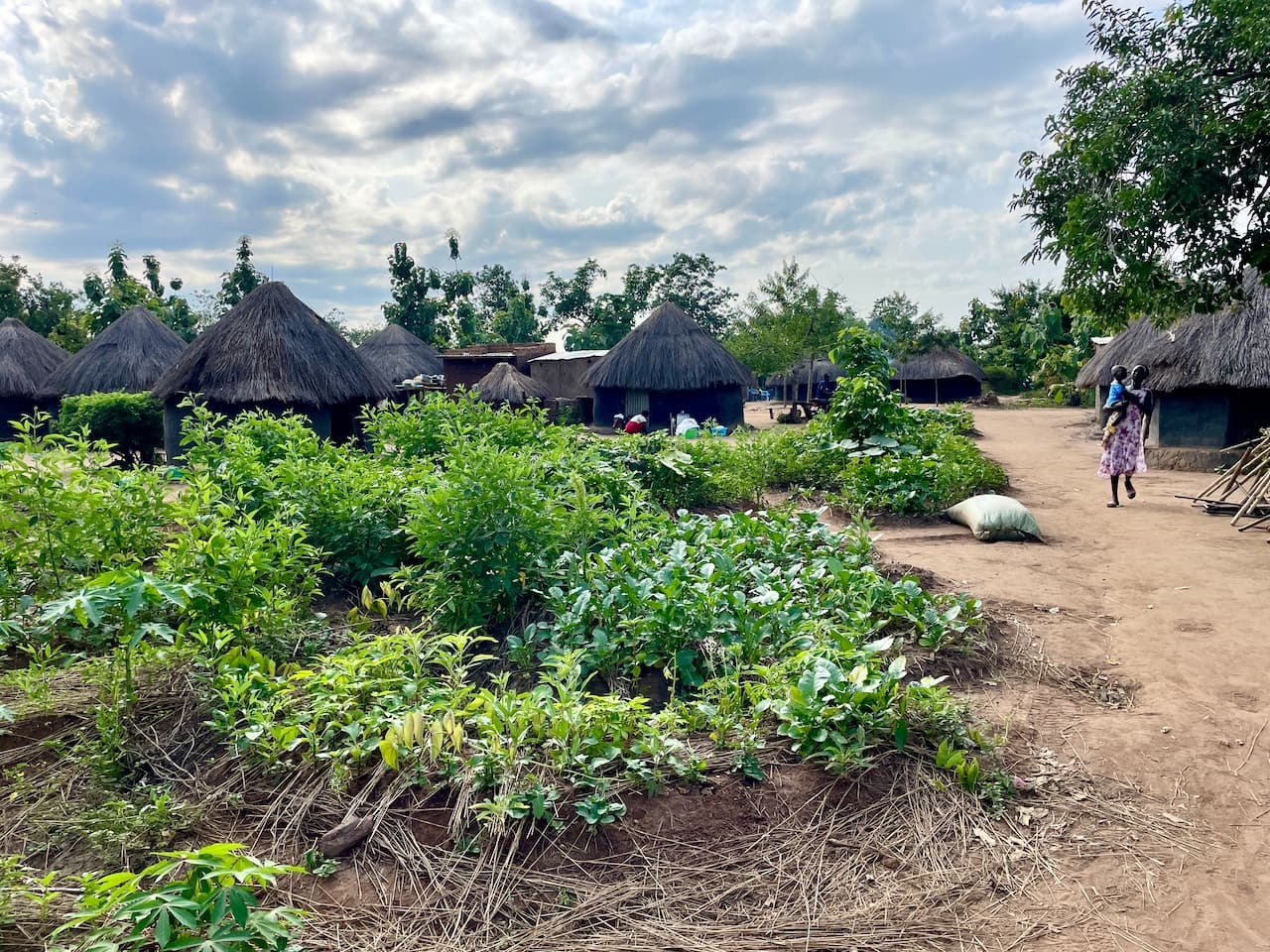
Can community-led permagardens help refugee and host communities in northern Uganda grow more varied foods and strengthen food security?
In Emergency Nutrition Network's Field Exchange Issue 78, two linked articles explore African Women Rising's permagardens, which bring together water management, soil fertility and biodiversity, alongside access to microfinance.
Respondents report:
- more frequent meals,
- greater dietary diversity, and
- income from surplus produce, with less reliance on food aid and foraged foods.
In light of shrinking food aid, designing and implementing locally relevant solutions is more important than ever.
With 97% of both community and refugee settlement participants reporting that they regularly eat from their permagardens, the findings underscore the significance of this approach for food and nutritional security.
-
Robinson O, Love A, Wamani S & Cole T (2026) Women-led permagardens for improved food and nutrition security in northern Uganda.
Field Exchange issue 78. Emergency Nutrition Network (ENN), Oxford, UK. https://doi.org/10.71744/my5q-3c69

Permagardens support households to produce nutrient-rich, preferred foods and to preserve or sell excess produce. Paired with microfinance programming, participants are strengthening their resilience to increasingly frequent economic and climate shocks.
African Women Rising has implemented, monitored, learned from, and adapted the permagarden approach over the last decade. To read about some of their key implementation lessons learned and innovations, we invite you to read the accompanying views article from Thomas Cole.
As climate pressures grow and funding for food assistance shrinks, these articles offer timely insights into more sustainable, locally led approaches based on the Resilience Design Approach.